Monday, December 17, 2012

Good To Be Back Under a Heavy Bar

Klokov Presses are a brutal exercise
that will help you add size and
strength to the shoulders
and upper back
Now that our deload week is over it's good to be back lifting heavy again!  I decided to push the volume and intensity today because coming out of our back off week the body felt primed for a tough workout.  Not only was this workout brutal for the entire upper body, but it pushed us to be mentally tough as well, especially by the end where my grip was shot and the very last thing I wanted to do was farmer's carries.  Nothing special here just heavy weights and hard work and sometimes that's all you need.

General Warmup
Dynamic Warmup

Band Pull Aparts--2x15
Band Rows--2x15
Scapula Pushups--2x15
Pushups--2x15

Power
1) Drop Pushup Ups--5x3

Strength
2) Floor Press--3x5 at RPE 8
--Worked up to 295 for 3x5, had to fight out the last rep but I felt good so I decided to push the intensity higher than I had planned

Assistance
3) Neutral Grip DB Bench--2x15

4) Pendlay Rows--4x8

5) Klokov Press--3x6-8

6) Pull Ups--3xSubmax

Muscle Building/Conditioning--3 Rounds
7a) Band Triceps Extension--Failure
7b) Rope Biceps Curls--15
7c) DB Side Lateral Raises--15

Finisher--3 Rounds
8) DB Farmer's Carries--110 lbs

Floor Presses are a partial movement variation
of the bench press and help to improve
the lockout portion of the bench press
Did a lot of work today.  Sometimes you have to push the envelope and force your body and your mind to leave their comfort zones.  This was a very taxing workout on the upper body, but I felt good when it was over and I'm excited for the rest of this next 3 week cycle of training.


Below is the link for the JMSB group on Facebook.  If you'd like to see workouts posted over winter break or ask questions or leave comments for anyone in our group of lifters join us!

https://www.facebook.com/groups/570800456266724/


Thursday, December 13, 2012

An Examination of my Bullshit


Okay, so maybe the title of this article isn't entirely fair to myself.  Here I sit, at 9:45 am on a Thursday, with literally NOTHING on my agenda that I'm responsible for today.  I've been awake since 5:30, tossing and turning until the rising sun's light filled my room and I finally got sick of laying in bed analyzing my current training program in my head and hearing my roommate talk and mumble in his sleep.  As a graduate student, my schedule doesn't match up with my peers who are still completing their four years of undergrad.  My classes were short but intense, beginning in late September and finishing the first week of December.  Therefore, for the last week and a half my life has consisted entirely of eating, sleeping, training, and hanging out with friends.

While I've been living the dream these past couple weeks, I've had far too much time to reflect upon and analyze my current training schedule and philosophy.  I'm a bit of a perfectionist when it comes to training, and admittedly, I usually end up driving myself insane scrutinizing every single detail of what I do.  I spend countless hours on the Internet, reading articles, listening to interviews, and watching Youtube videos of the world's elite strength coaches and lifters.  My thirst for knowledge about the subject of strength and conditioning is unquenchable, but often leads me to drive myself insane trying to process the vast amount of information that I take in on a daily basis.  In order to combat my tendency to over complicate everything I do, I felt it would be therapeutic to take this opportunity to break down, for the benefit of both you as a reader and myself, what I and my training partners do, and exactly why we do it.

Some of the best advice I've ever heard came from Mark Bell of Supertraining Gym in California.  Bell is a world-class powerlifter who is incredibly generous with his knowledge of the sport of powerlifting and training in general.  If you search him on Youtube or Google, you will find more videos and articles of his and his member's training than you'll know what to do with.  In one of his videos, Bell said each and every day you train, you should have a goal and a focus going into the workout.  It doesn't matter what you're training for, how you're training or where you're training, you must come into the session with a specific idea in mind of what you want to accomplish with your workout, and how you're going to accomplish it.  Without an understanding of what you're trying to achieve, both short-term and long-term, one cannot expect to be able to take the proper steps to reach their goals.  

Now, how is this applicable to you?  Not everyone is an athlete.  My training partners and I are all current or former college football players.  We train with a specific purpose so that we may improve attributes that are necessary to be successful in our sport.  Some may go to the gym for general fitness purposes only, some aspire to be powerlifters, other want to be Olympic lifters, and even more just want to be strong because they're red-blooded Americans and want to look good for the opposite sex.  Whatever you're reason is for training, it's vital that you approach your training in a practical manner.  Blindly going into the gym without a purpose or goal isn't going to get you where you want to go, regardless of where that is.  With that in mind, here is a general breakdown of how and why we train.

1) Warmup--I'll classify both general and dynamic warmups into this one category.  I've written before about stretching before working out.  Studies have determined that it not only doesn't help to prepare the body to perform work, but that it is also detrimental to strength and power output.  So, instead of the classic static stretch, we perform two different warmups that total 15 minutes.  First, a general warmup is done with the purpose of raising the heart rate and getting blood pumping through the body to the muscles which prepares the body to perform more strenuous work.  Then, after five minutes of a general warmup, we perform a dynamic warmup.  Dynamic warmups are specific to the activity one is doing.  It involves performing movements that activate the muscles and central nervous system, preparing them to handle the training that will follow.  In just this 15 minute period, you can improve your numbers in the gym and your overall health.  I promise you, if you haven't experienced a gym-related injury yet, one is coming your way if you don't begin to warmup properly.  I'm not talking about going in and bench pressing 135, then 185, than 225 cold and calling that a warmup.  I mean taking the time to work on mobility and activation drills to properly prepare your central nervous system and muscles to perform work.

2) Power--Power is defined as force times time.  This may be the single most important concept in sports.  With the exception of long, slow athletic events such as cross country or long-distance swimming, most sports involve explosive movements, where the body must produce a great amount of force in a short amount of time.  Think about it, in football, each position, from offensive lineman to kicker, must be able to, in a very short burst, reach peak force production in order to be successful.  A lineman must come off the ball and with only a yard of space between him and his opponent, produce enough force to drive the defensive lineman off the ball.  A kicker must use their trunk musculature and entire lower body to quickly produce enough force to kick the ball as far as they can.  In soccer, an athlete may go from a dead stop to a full sprint in a matter of seconds, then have to bury a shot hard enough to beat the goalie.  In basketball athletes must be able to go from a complete stand-still to a maximal jump as fast as possible in order to pull down a rebound of shoot a ball over the hands of a defender.  These are just a few examples, but in each one, the athlete who is able to produce the most force the fastest, is most often successful.  This is known as "rate of force development," and is the pinnacle of what an athlete is striving to achieve and improve through their training. 

I say the pinnacle, because power can only be developed once a number of other criteria are met.  Because power is equal to force x velocity, power can only be achieved when an individual possesses a base of strength (aka force) production, and an ability to move that force quickly (aka velocity).  Therefore, everything we do is based on the idea that while our goal is to improve our power production, we must do so through training that focuses on improving our maximal force output, as well as our body's ability to produce force rapidly.

Now, how does this apply to the normal gym goer?  I haven't met many people, (guys mostly) who want to be weak and look weak.  Chances are, if you're going to the gym, your goal is to get stronger and get bigger.  So you may ask yourself, why do I care about things like "rate of force production," I just want to be jacked and be able to deadlift and bench press a ton of weight.  Well, first, if you want to build muscle, you need to get stronger.  Using the same stimulus over and over and over won't do.  Any gains you get in muscle size will stall as the body adapts to the training stimulus.  So, in order to continue to build muscle, you must manipulate the volume and intensity (sets/reps/weight/exercises) you are performing.  Inevitably, this means you have to lift heavier and heavier things for varying reps which will build muscular strength and size.  
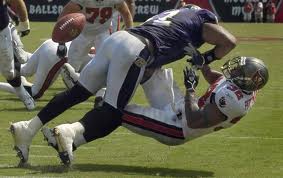
So now you're using a program that varies the volume and intensity of training so that your able to avoid hitting a plateau where the body adapts to the exercise stimulus and your gains stop.  Great, but you're still failing on that 350 pound bench press you want to brag to your friends about, or you just can't seem to finish off that 500 pound deadlift you've been working for.  One of your problems may be that even though you have great maximal strength, your rate of force production isn't high enough to finish these movements with maximal loads.  Lifting weights is no different than a basketball player jumping, a soccer playing sprinting, or a football player trying to knock the crap out of his opponent, it all involves the body exerting force on an outside object.  In order to successfully complete these tasks, the body must be able to produce maximal force as quickly as possible.  Think about it, with no momentum, in order to deadlift 500 pounds, the body must be able to produce enough force to overcome that load.  However, if it takes too long to reach this peak force output, you're not going to be able to move that weight from point A to point B.  

If you've ever watched an Olympic lifter clean and jerk or snatch you understand what I mean.  Regardless of how heavy the weight is, the bar is ALWAYS moving quickly, or they won't make the lift.  A basketball player never jumps slowly, or there's no shot they're going to get higher faster than they're opponent to grab a rebound.  One of the most impressive things about world-class powerlifters like Brandon Lilly, is that even as the weights get heavier, they continue to move the bar with incredible speed an technique, even as they reach near maximal loads, (search Brandon Lilly's 815 pound deadlift on Youtube if you want to see what I mean).

So, how do you get over the top to pull that 500 pound deadlift you've been working at for years?  You focus your training on improving your body's rate of force development.  Using submaximal loads and explosive movements, you train your central nervous system and muscles to reach peak force production faster and faster.  Now, instead of being like a crappy car that needs 20 seconds to get from 0 to 60, you can reach your maximum strength output rapidly, which allows you to use the maximal strength that you possess to move heavy loads.  

3) Strength--I once read a great quote that said, "without strength, there is no power."  Strength is the foundation by which power is built.  I don't care how many power cleans you do at 135 pounds, how many box jumps you do, or how far you can throw a medicine ball, if you don't have a base of max strength, you are not going to be powerful.  While we work on a power movement at the beginning of each workout, the core lift of our workout is always designed to build pure strength.  The best lifts to achieve this are the bench press, the overhead press, the squat, the deadlift, the clean, and the snatch.  These lifts recruit more muscle fibers and muscle groups than any other.  Not only are they economical because they allow you to work so many muscle groups with one movement, but they allow you to use heavier loads because more muscles are involved, all of which means that the body will produce more testosterone which is the key muscle-building hormone.  Simply put, if you want to be strong and powerful, you need to be attacking heavy compound movements that tax many muscle groups at once and build your body's maximal force output.  There is a reason the squat is called "the king of all lifts" and the deadlift is known as "the greatest assessment of raw strength and power."

4) Speed--We improve the central nervous system's and muscle's ability to produce force quickly through the use of submax loads, at max speeds.  For example, we'll use between 50 and 75% of a person's one rep max or estimated one rep max.  Because the weight is lighter, the athlete is capable of moving the weight at a high velocity.  Essentially, they are focusing on moving the weight as if it were a maximal load, trying to apply as much force as they possibly can to a weight that is submaximal.  This teaches the central nervous system and the muscles to activate quickly and improves rate of force development.  There are numerous ways to improve rate of force development, one not better than the next.  Its all a matter of properly implementing a system that teaches athletes to produce velocity.  Some prefer Olympic lifts, others like basic jump training, right now, I am trying out a system of using submaximal weight on lifts like the push press, squat, and deadlift to improve speed and therefore, power output.  

5) Assistance--I need to make this very clear, assistance work is just that:  ASSISTANCE.  It assists your major lifts.  No, bicep curls, triceps kickbacks, and chest flys should NEVER be the cornerstone of your lifting.  These exercises are utilized after the main power, strength, and speed movements of the workout in order to build muscle and strength in specific muscles that will help boost core lifts, build up weaknesses, and avoid muscular imbalances.  Due to the nature of assistance exercises, I am not of the belief that people should do the same assistance work weak after weak for long periods of time.  I rotate my assistance work almost every workout, focusing on muscle groups that are important to improving our core lifts (squat, deadlift, bench press, overhead press) and to help improve weaknesses in myself and my athletes.  For example, most athletes are pressing dominant.  They spend their lives trying to build a big chest and neglect the upper back, biceps, and elbox flexors.  Simultaneously, most people squat but don't deadlift, because they have been told (incorrectly) that the deadlift will screw up their back forever, or just because the deadlift is just too damn hard.  Finally, many athletes do millions and millions of crunches and movements to improve abdominal strength and size, but neglect the all-important muscles of the lower back which are just as vital for spinal erection of stabilization.  These muscular imbalances not only lead to less than optimal strength output, but can also lead to injuries because the stronger muscles must pick up the slack for the underdeveloped muscles of the posterior chain.  So, with that in mind, my training partners and I do a ton of upper back work, (pull ups, band pull aparts, face pulls, rows of every conceivable kind, lat pull downs, etc) and glute, hamstring, and lower back work (Romanian deadlifts, snatch-grip RDLs, banded good mornings, barbell good mornings, speed deadlifts, glute/ham raises, back extensions).  These exercises serve as assistance to build up weaknesses and improve the muscles that perform work during our core lifts.  


Wrap Up

In approaching our workouts, we organize them starting with exercises that require the most energy and effort, and finish with less important assistance work.  We begin with activation, (warmup) then do a power movement, then a maximal strength movement, then speed, and finish with assistance and core work, which also serves as our conditioning.  This is a very basic and broad way to explain our training, and I could go on forever explaining exactly why we do things this way.  I'm not saying this is the best method, I'm not saying it's the only method.  However, it is a basic and effective template that I have utilized with personal success for some time now.  So maybe the title of this article is a bit unfair to me, because there is method to my madness. 

Everyone is different, and it's important to discover what works for you.  The key here is to take the time to break down your goals and what you need to do to reach those goals as I have done here.  Then, once you have established your long term goals, figure out the specific steps you need to take to reach them.  Remember, every workout you should have focus.  It doesn't matter if its to move submaximal weight as fast as possible, try a new lift that you think will build up a weakness of yours, get one more rep than last week, or hit a personal record on the deadlift or squat, just make sure you take the time to set a goal for that workout that will help you on your path to achieving your ultimate goal.  Embrace the grind, find your why, then focus on what you have to do to get there.  

Tuesday, December 11, 2012

Deloading: Backing Off for Bigger Gains

For the longest time I resisted deloading because I absolutely hated the idea of taking a week to "back off" heavy training and allow the body to recover.  I always intended to give it a try but every time I'd step into the gym for a deload workout I'd end up letting my ego get the best of me and I'd get into a workout with too much volume and intensity to be considered a deload.  Now, as I try to increase my knowledge and understanding of strength training so that I can be well educated in as many techniques as possible, I realize that you can read about a concept as much as you want, but you'll never know what works for you and the athletes you train or train with until you actually try something.  With that in mind, this is the fourth week of our first post-season training cycle, and our first deload week.

Mark Bell is one of the strongest powerlifters
in the world--here he deadlifts 405
plus 80 pounds of chains--even the
best in the world don't train maximally
ALL the time, they train optimally
Deloading a concept by which you take a period of time to back off your normal training and allow the central nervous system and the muscles to rest and recover.  The idea behind deloading is that if you continue to tax the body and mind week after week by training with high volume and high intensity, you will eventually burn out, and no matter hard you work, your gains will plateau or actually regress.  Most people don't understand how important a healthy central nervous system is to strength gains.  Your central nervous system is responsible for coordinating all functions of the human body.  It is responsible for muscle activation, as well as operating the endocrine system which secretes hormones like all-important testosterone into your blood stream.  Overtraining and overworking the central nervous system will lead to negative consequences such as fatigue, loss of motivation, depression, loss in strength, loss in muscle and strength gains, etc.  So, you plan a period of rest every so often into your training cycles which allows the body and mind to recuperate and come back stronger for the next cycle of training.  As Bill Klika put it to me, "two steps forward and one step back is still a step forward."  

There is no one way to deload.  Search the Internet, read textbooks, look up weightlifting and strength and conditioning magazines, talk to coaches, etc.  and you will inevitably end up getting more opinions on the topic than you'll know what to do with.  Because there is no one agreed upon way to do this, the only way for me to learn what I like and what is best for the body is trial and error.  So, for this deload week, we utilized our main barbell lifts that we have been doing throughout the first cycle, (some would say take the barbell completely out of the equation) but cut the volume and intensity by nearly half, focusing on technique and speed.  We also cut the assistance work volume and intensity in half.  This is a perfect example of a time where body weight training is a great idea.  You'll notice the only thing not cut down, is our warmup.  During deloading it's still vital to properly warmup, and because the goal is active rest, a proper warmup may be the most important part of the lift.  

Our workouts are short, so far both have been under 50 minutes, warmup included.  We move quickly, we get a good sweat going, then we're out of there.  I believe this will allow us to work on general physical preparedness while not taxing the CNS and the muscles to a point where our recovery is jeopardized.  Remember, deloading is active rest.  Workouts should be short, you should NEVER go until failure, or be handling loads that are heavy enough to really tax the body.  Deloading is a recovery period and should be treated as such.  Check your ego at the door, this is about training OPTIMALLY not MAXIMALLY, get some good work in, then get out of the gym so that next week you can come back healthy and strong and ready to attack heavy weights.

If you've hit a plateau in your training and have been stuck in the same routine and lifting the same weight for a long time, or you just feel tired, beat up, or have lost the motivation to train, it may be time to deload.  Some believe you should take time off completely from lifting, others believe you should continue to do light work 2-3 times a week, and others like to still use barbell lifts but with light weights to work on technique.  Whatever you choose to do, begin to use planned periods of rest in your training, and you'll feel healthier and blast through plateaus like never before.  

Workout #1

General Warmup--Jogging, skipping
Dynamic Warmup

--Active/Dynamic Movements--4 each
--Groiners--2x10
--Walking Lunges--2x10 forward/backward
--Banded Good Mornings--2x10

Power
Backwards Underhand Med Ball Throws--2x5

Strength
Deadlift--3x5 at 60% 1RM
--Used 270 lbs and deadlifted conventional because I've been pulling sumo so much

Assistance
Snatch-Grip RDL--3x8
Using a snatch forces more activation and work by
the all-important upper back musculature
and improves grip strength

Circuit #1--2 Rounds
Goblet Squat--10
Inverted Row--10
Back Extensions--10

Circuit #2--2 Rounds
Reverse Lunges--10 each leg
Band Pulldowns--10
Sprinter Sit Ups--10 each side


Workout #2

General Warmup
Dynamic Warmup

--Banded Rows--2x15
--Band Pull Downs--2x15
--Band Pull Aparts--2x15
--Scapula Pushups--1x20
--Alligator Pushups--2x10 forward and backward

Power
Explosive Med Ball Chest Pass--2x3

Strength
Bench Press--3x5 at 60% 1RM
--Used 205 lbs

Assistance
Barbell Rows--3x8

Circuit #1--2 Rounds
Klokov Press (Behind the neck snatch grip press)--10
L-Sit Pull Ups--10
Anti-Rotation Press Hold--20 seconds each side

Circuit #2--2 Rounds
Rolling DB Triceps Extension--10
DB Hammer Curls--10
Band Pull Aparts--25

Friday, December 7, 2012

Mental Toughness Workout

After spending most of the day in bed feeling like I got run over by a Mack Truck, (my own fault) I finally mustered up the energy to go grab some food and get in my last heavy session of a 3 week cycle.  Next week will be a deload week, which I will explain and outline over a post or two next week.  It couldn't come at a better time either.  I feel like I've pushed the volume and intensity of my workouts to a peak over these last three weeks, and it will be beneficial for my training partners and I to back off for a week to allow the central nervous system and muscles to recover.  

World Class Powerlifter
Brandon Lilly
I was particularly proud of this workout because I ate nearly nothing all day and felt like absolute shit.  Again, this was entirely my fault, and moving forward, I won't let it happen again, but I felt good about the fact that instead of taking the whole day off and trying to get the lift in tomorrow, I sacked up and got it in anyway.  Surprisingly, despite only eating one meal and spending most of the day dead in bed, I actually had a pretty good lift.  Just goes to show, sometimes you need to push the mind and body to the limit to find out how far you're capable of going.  Listen to your body, but know the difference between a situation where you really need to back off your training and a when you can push yourself and develop mental toughness.   That's one of the great things about training, not only does it develop your body, but it allows you to develop so much more.  Toughness, determination, and perseverance can all be forged through long hours spilling blood, sweat, and tears in the gym.  These attributes will follow you and carry over to so much more than training.  So next time you really don't feel like lifting, or you haven't been eating right, or it would be so much easier to take a nap or go drink with friends, push yourself and see what you're capable of. 

Embrace the grind.

General Warmup
Dynamic Warmup

Active-Dynamic Warmup Series--4 each movement
Offset Band Pull Aparts--2x15
Terminal Knee Extensions--3x15 each leg
335 lbs + Light Green Band Tension

Power
Seated Tuck Jumps--3x3

Strength
Front Box Squats--8x3
--Worked up to 310 lbs for 3

Speed Work
Speed Deadlifts w/ Bands--6x3
--Used 75% of current estimated 1RM plus light green band tension

Conditioning/Muscle Building--3 Rounds
Pendlay Rows--8
Band-Resisted Glut/Ham Raises--8
Sprinter Sit Ups--12 each side

Finisher
Chain/DB Weighted Cossack Squats--2x6-8 each leg

Thursday, December 6, 2012

Ass-Kicking Upper Body Training


Single Arm DB Pressing w/a light object in
opposite hand to enforce technique
In my last post about upper body training I talked about the overuse of the barbell bench press for developing and displaying upper body strength and power.  Today was a prime example of a movement that kicks the crap out of the bench press in this department.  When putting this dynamic, repetition effort upper body training session, I realized that we hadn't done overhead pressing AT ALL yet.  Now, some will argue until their death that overhead pressing is bad for the shoulders and will cause or aggravate shoulder injuries, blah blah blah...I disagree.  I think the overhead press, and its many variations, are an excellent way to build strength and muscle mass in the entire upper body.  The overhead press has great carryover to the horizontal press as well, because people often forget how important a role the muscles of the shoulder are in having a strong horizontal press.  Need proof?  Look up any powerlifter who does overhead pressing, whether it be strict press, military press, push press etc. doesn't matter.  You will begin to realize that guys who have a strong overhead press almost always have a strong bench press as well.  However, guys who do no overhead pressing, but bench press frequently, won't necessarily have a big overhead press.  Basically, the overhead press helps the bench while the bench doesn't help the overhead press as much.

Mattera killing pull ups
However, you should be smart when implementing overhead pressing.  If a doctor has told you not to press overhead, for the love of God listen.  Mike Mancino has a potentially serious shoulder injury right now, and I would never want him to aggravate that by overhead pressing.  So, he did repetition method with banded barbell pushups.  That being said, I love overhead pressing.  There's just something badass and primal about throwing heavy weight over your head.  I had missed it, and today we cranked out push presses to develop full body power and strength.  The reason I like the push press as opposed to the military press is because the push press protects the shoulder because the shoulders don't actually begin to move the weight until its already moving due to the momentum developed by dipping through the hips and driving through the floor.  At this point, the shoulder is in a much safer position to push the weight overhead, as opposed to the military press where the motion begins in the rack position and is initiated entirely by the arms, upper back and shoulders.  Additionally, the push press, because it involves the legs and hips, allows the athlete to overload the muscles and use more weight.  This is a case where more weight is absolutely better.  It teaches the whole body to operate explosively as a unit, recruiting more muscle fibers to move heavier loads, which the body responds to by secreting more testosterone into the blood stream.  Remember, the more muscle groups involved in a movement and the more motor units used, the more testosterone the body releases, and the greater your gains.  This is why movements like the deadlift, the squat, the standing barbell overhead press, the bench press, the clean and jerk, and the snatch are the best movements for building strength, power, and mass.  They incorporate more muscle groups into one movement than any other exercise.  Throw some assistance work in at the end and you got a kick ass workout that had each and every one of us beat up, tired, but feeling great.  If you want to pack on muscle in the upper body and back it up with some serious strength...PICK UP A BAR AND PUSH HEAVY SHIT OVER YOUR HEAD!


General Warmup
Dynamic Warmup

Pushup w/ groiner--2x10
Banded Rows--2x20
Two-Way Band Pull Aparts--2x20
Banded Shoulder External Rotations--2x15 each arm
Scapula Push Ups--2x15

Power
Jammer--4x5 each arm

Strength
Push Press--4x8-12
--Finished with 176 lbs for 8

Assistance
Weighted/Body weight/Assisted Pull ups--4x8 (Varied Grips)

Muscle Building/Conditioning--3 Rounds
Single Arm DB Bench--12 each arm
Inverted Rows--15
Hanging Knee/Leg Raises--Failure

Finisher--3 Rounds
Farmers Walks--2 Laps w/ chains and dumbbells
A couple jacked up fingers couldn't stop Pis

Gun Show
Straight Bar Triceps Pushdown--3x15


Tuesday, December 4, 2012

The Truth About Stretching and HEAVY Pulling


One part of a single leg groiner, an excellent
active warm-up
For a long time conventional wisdom has suggested that athletes and lifters stretch before training or competing.  The idea being that stretching before rigorous activity prevents injury and helps improve overall performance.  However, there is a lack of scientific evidence to support such an idea, and elite strength and conditioning coaches now understand that there is not only no evidence to suggest that stretching before training prevents injury or improves performance, but that it can actually limit strength and power output.  Some studies have concluded that individuals saw a reduction in strength after just 30 to 60 seconds.  The reason this occurs, without getting too scientific, is that a stretched muscle needs time to take up the slack caused by stretching before it can reach peak contraction.  The longer and harder you stretch, therefore, the longer you have to wait before the muscle will be able to reach peak contraction again, (Heyward, 2010).

Now, how does this concept apply to you?  If you are an athlete who is at all interested in improving your strength and power, you should not stretch prior to training or competing.  You severely inhibit your strength and power output if you do so.  Instead, you should use a dynamic warm-up in order to properly prepare your body.  Regardless of what type of training you are doing, your warmup should be at least 15 minutes long and should include a general warm-up and a dynamic warm-up.  What you do is up to you, but the exercises should activate your central nervous system, (which is more responsible for strength and power output than your actual muscles themselves) and your muscles.  Begin with simply calisthenics like jogging, skipping, jumping jacks, etc.  This gets blood flowing, increases heart rate, and activates the central nervous system.  After 5 minutes of this general warm-up, go into a dynamic warm-up.  This should be sport/activity specific, mimicking the movements and activating the muscles that will be utilized during the workout or competition.  These can be anything from pushups, to groiners, to resistance band work, to glute/ham raises, pull ups, body weight squats, lunges, skipping, skipping with a bound, sprinting, and everything in between.  While most people would rather touch their toes for 30 seconds then squat, it is much more beneficial to both your health and your results in the gym to take the time and get a good active-dynamic warm-up in before training.  Next time you lift, take 15 minutes to properly warm-up.  Don't stretch, but use calisthenics and body weight exercises to activate and get blood flowing to the muscles that will be taxed during your training.  I promise you, doing this on a consistent basis will not only make you feel better during and after training, it will enhance your performance which is what we're all in the gym to accomplish in the first place.

Today was the last heavy deadlift day of the first 3 weeks cycle of postseason training.  After a dynamic warm-up and some explosive med ball throws we got into a heavy deadlift workout.  Everyone was pushing each other and working their ass off.  There's nothing better than training with a group of guys who get excited when someone steps onto the platform to pull some big weight.  Leonte, Mattera, Rizz, Mancino, and CJ Vines and fought through a brutal workout and got better today.  Love liftin' with these guys they walk the walk and show what embracing the grind is all about!
World class powerlifter Dan Green
How do you get a back like that?
Start with Heavy Deadlifts

General Warmup
Dynamic Warmup

Groiners--2x10
Lateral Slide Steps--2x5 steps each direction
Body Weight Box Squats--2x10
Glute Bridges--2x10

Power
Underhand Backwards Med Ball Throws--6x2

Strength
Deadlift (Sumo)--1x4 at 8 RPE, 2x2 at 9 RPE
--Worked up to 396 lbs for a set of 4, and 430 lbs for 2x2

Assistance
Deficit Deadlifts (Conventional)--8x1 w/ 60 seconds rest between lifts

Upper Back Muscle Building
Strict Lat Pulldowns--4x10

Muscle Building/Conditioning--3 Rounds
DB Goblet Squats--10
Lying Swiss Ball Leg Curls--15
Anti-Rotation Band Hold--30 seconds/side

Joe Meglio of Meglio Fitness, a former FDU student
performing anti-rotation press (kneeling)
Abs
Straight Leg V Sit Up--3x20


Finally, I'd like to say good luck to my boy Jim Rizz as he goes to play in the Senior Classic in Salem, Virginia this Friday.  You've earned it brotha go enjoy it.  For everyone else share this with your friends, enjoy the workout and don't forget to get a proper warm-up in beforehand.  If you'd like to check out the source of the information in the first paragraph I left the text citation below.


Heyward, V. H. (2010). Advanced fitness assessment and exercise prescription. (6 ed., p. 290). Champaign, IL: Human Kinetics.

Monday, December 3, 2012

Heavy Pressing Like a Good Amurican!


320 for 2x2, felt good to get under
a heavy bar
Let's all face it.  Monday is national bench press day.  I've fought it for God knows how long because I've never been a big fan of the bench press, but due to how my training split this month worked out, the first upper body day of the week fell on a Monday.  The reason I don't like the bench press is not because it's not effective.  There is no doubt that an individual can increase their upper body strength and power through a properly implemented bench press program.  However, the fact that I see people bench pressing 2, 3, and even 4 times a week...EVERY WEEK...is just ridiculous.  It is an overrated and over-used method of improving upper body strength and power, and its popularity has forced people to neglect great exercises like push ups, pull ups, and overhead pressing.  People use every conceivable variation of the pressing motion and do what is termed "chest and tris" day.  This leads to consistent overtraining and even more importantly, shoulder injuries after years and years of over-developing the pressing muscles and neglecting the equally as important or even more important pulling muscles of the elbow flexers, (upper back muscles and biceps).  I talk to people all the time who complain to me that they've been stuck pressing a certain weight or have even lost weight on their bench but they're training harder than ever and they can't understand why.  Inevitably, when I ask them what type of program they're doing, I hear, "chest on Monday, back and bis on Wednesday..." so on and so forth.  Never mind that this often includes just one leg day a week or something ridiculous like that, these people are setting themselves up for failure because they're not training optimally, they're simply beating the crap out of the muscle which any idiot can do.  

Now that I got that rant out of my system, on to today's workout.  It seems the training is just getting better and better every week.  Not wanting to be un-American we hit a heavy upper body day today to finish out a 3 week wave of lifting.  Rizz, Mattera, Pis, and even big Mo Bassie joined in the fun.  Everyone was hyped to lift after taking a weekend off to recover and the energy came through.  It's exciting to see so many people who look forward to getting in the gym and moving heavy shit to get bigger and stronger.  Some want to improve on the football field, some are just training to be big strong dudes.  Whatever the reason, these guys are motivated and hungry to get better every time we step into the gym and I couldn't ask for more out of training partners.  


General Warmup
Dynamic Warmup

Upper Body Activation/Prehab
Banded Face Pulls--2x20
Banded Rows--2x20
Banded Triceps Extensions--2x20
Banded Lat Pulls--2x20
Bird Dogs--2x10 each side

Power
Explosive Standing Med Ball Chest Pass--10x1 Full Recovery

Strength
Bench Press--1x4 at 8 RPE, 2x2 at 9 RPE
--Worked up to 285 for a set of 4 and 2x2 at 320, didn't plan to go that high but felt easy so kept going up

Assistance
Single Arm DB Row--3x12

Shoulder Stabilization/Work Capacity
Chaos Bench w/ a 35 and 20 lb DB on each side of bar--3x15
--DB are attached to bar with resistance bands creating unstable resistance
Brian Pisano working high rep chaos bench for shoulder stability

Muscle Building/Conditioning--3 Rounds
Rope Curls--12
Dips w/ Leg or Knee Raise--8-12
Band Pull Aparts--25

Abs
Band-Resisted Knee Tucks--3x12

Christian Mattera is a BIG STRONG MAN
The key here is progress.  Everyone has gotten stronger week to week in this program, and even small improvements like athletes who begin by wobbling uncontrollably on the chaos bench locking in their form and stability is awesome to see.  This was a brutal session that had us all gassed.  After starting out heavy on the bench we upped the volume this week.  This is the last week of our first cycle coming off of the football season and while it's important to get back to moving heavy weight, we didn't work up to a true max this month because I didn't want to overly tax the CNS and muscles coming off the rigors of a college football season.  Our goal was to build a basis of strength and work capacity that will help us to lift heavier and do more specialized movements in the coming months.  Again, the key is progress.  Steady, consistent gains in muscle and size without over-taxing the body to the point where over training or injuries occur.  Enjoy this workout as we did and keep grindin'!